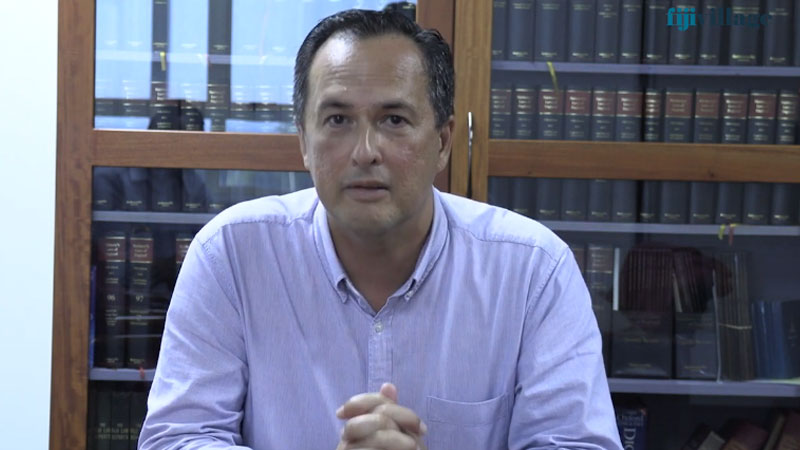
Sentencing matters must be left to the discretion of the judiciary, and ministers should be careful when commenting on criminal law matters according to the Fiji Law Society.
Law Society President, Wylie Clarke says the Fiji Society has noted with concern the remarks reportedly made by Minister Rosy Akbar at a recent meeting on the National Action Plan Against Violence Against Women, including that she “reminded” the judiciary of its role in domestic violence cases and that she lobbied the audience of judges and magistrates “for stricter measures in every single case of domestic violence and sexual offences because it could save lives.”
Clarke says Minister Akbar is further reported as criticising a court decision to grant bail to an accused person, implicitly suggesting that the judiciary does not know its job and has some responsibility for a very serious crime that was subsequently committed.
He says the Office of the DPP has expressed its concern at the Minister’s comments, saying that sentencing is a judicial function, not a political one.
The Fiji Law Society supports the position of the Office of the DPP.
Clarke says the Society shares the Minister’s concerns about the prevalence of sexual, physical and other forms of violence against women and children in Fiji, which is one of our country’s most serious social challenges.
He also says they support wide public debate on causes and possible solutions.
However Clarke says it is inappropriate, for a Minister - an officer of the executive arm of the State - to “lobby” the judiciary to impose stricter sentences.
The Law Society President says the separation of powers between the executive and judicial arms of the State must be respected.
Clarke says the Government and Parliament do have a role in these matters if, for example, they wish to legislate for specific sentences for sexual or domestic violence offences.
However, he says passing laws to prescribe sentences for any offence is risky, because laws cannot respond to every human situation.
Clarke says broad consultation is also an essential part of such an exercise, and the Government does not have a good record of consultation on important issues of law, such as the abolition of the assessor system or the restructuring of corruption courts.
He says while the Minister has the right, as all citizens do, to respectfully criticise judicial decisions, including on bail matters, she must ensure that this is not seen as trying to pressure the judiciary into adopting any general practice.
Clarke stresses it is particularly important that an influential politician is not seen to do this.
He says strong rule of law is built on respect for and adherence to a clear separation of powers between the executive, the legislature and judiciary.
Clarke says on important public issues such as this, there is a role for all of us, including the public.
But he says it is equally important that we all understand our roles - and “stay in our lanes”.