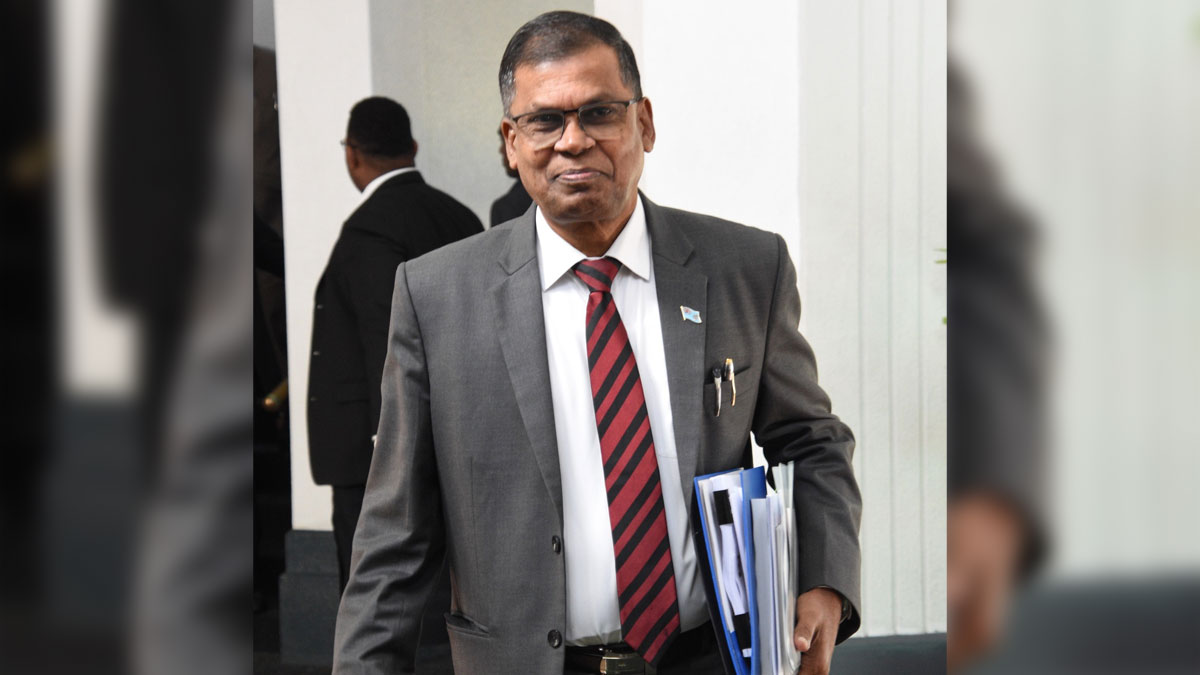
Get ready to tighten your belts as Deputy Prime Minister and Minister for Finance, Professor Biman Prasad has announced some stringent measures in the 2023/2024 National Budget which includes increase in VAT to 15 percent for those items that are not zero rated, other increases and decreases in duties - and with a stern message that we have to take the medicine now and address our debt situation which stands at $10 billion.
Effective from 1st August 2023, there will only be 2 rates of VAT.
The 21 items on zero VAT will continue.
They have added prescribed medicines to the list to make it 22 items. The items on zero VAT will include, flour, rice, sugar, canned fish, cooking oil, potato, onion, garlic, baby milk, powdered milk, liquid milk, dhal, tea, salt, soap, soap powder, toilet paper, sanitary pads, toothpaste, kerosene, cooking gas and prescribed medicines.
However the supply of all other goods and services, effective from 1st August 2023 will attract a VAT rate of 15 percent. These measures will generate additional net VAT collections estimated at about $446 million for Government.
Professor Prasad says they are going to increase the excise tax on alcohol and tobacco by 5 percent while the excise on carbonated/ sugar-sweetened beverages will be increased from 35 cents per litre to 40 cents per litre.
To curb NCDs and promote healthy living, a domestic excise of 40 cents per kilogram or per litre and import excise of 15 percent will be introduced on juice (carbonated drinks, Frubu, Tampico, Pulpy, Just Juice and Marigold), ice cream, sweet biscuits, snacks, and sugar confectionery.
Government will reduce fiscal duty from 32 percent to 15 percent on canned mackerel (except canned tuna), corned mutton, corned beef and beef products, canned tomatoes, prawns and duck meat.
Fiscal duty on sheep/lamb meats will be reduced to zero. Beef meat the duty is being reduced from 32 percent to 15 percent.
Government will also reduce import excise on chicken portions such as wings, drumstick, legs, feet, thighs, etc from 15 percent to 0 percent.
Motor vehicle import excise duty will increase on all new and used passenger vehicle by an additional 5 percent.
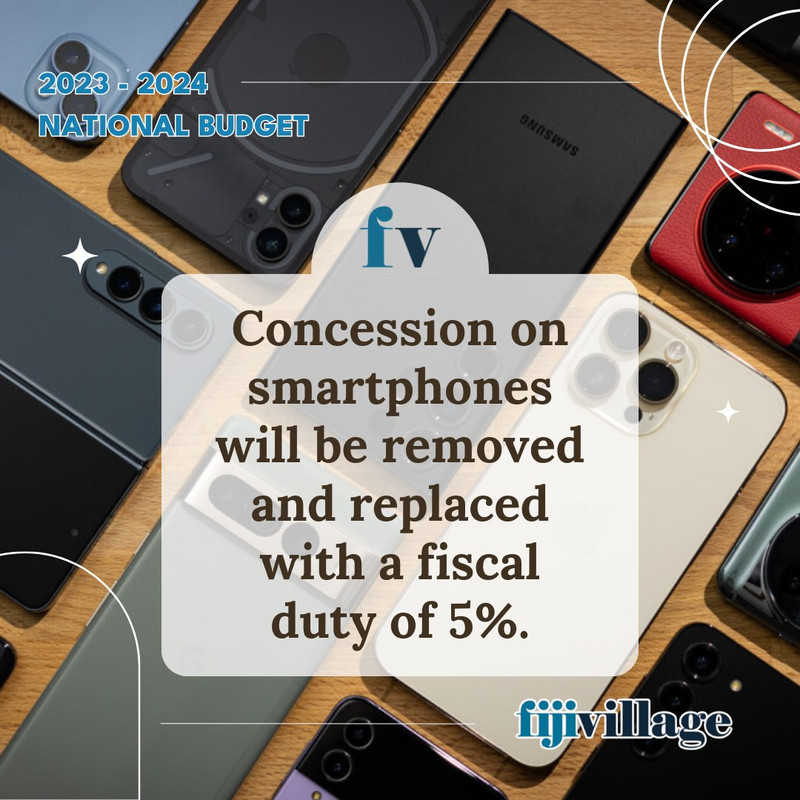
The concession on smartphones will be removed and replaced with a fiscal duty of 5 percent.
The corporate tax rate will increase from the current 20 percent to 25 percent.
New companies eligible for reduced corporate tax for listing on the South Pacific Stock Exchange will have their tax rate increased from the current 10 percent to 15 percent. This will be for new companies and only for a period of 7 years.
These corporate tax rate increases will add about $73.5 million in revenue.
Departure Tax will increase from the current $100 to $125 effective from 1st August 2023 and will further increase by an additional $15 to $140 effective from 1st January 2024. This will add a total of $30 million towards overall tax revenues.
He says the Social Responsibility Tax will be simplified by merging it with the PAYE structure, along with a 5-percentage points reduction on each band, for those earning above $270,000, effective from 1st January 2024. This would mean that the maximum marginal tax rate will be reduced from the current 44 percent to 39 percent.
Customs concession code 236 which currently allows all manufacturers to access duty free raw materials and other machinery and equipment, will have the concession rate increased from zero percent to 3 percent.
Concession code 231 which is available to manufacturers for import of packaging products, that concessionary rate will also be increased from zero to 3 percent.
Code 235 allows hotels and resorts to import building materials, furnishings and fittings, room amenities, kitchen and dining room equipment, utensils and outdoor equipment all duty-free. The government will increase the fiscal duty on this concession from 0 to 3 percent.
Concession code 117 (iii) which allows for a reduced duty of 10 cents per litre of fuel for hotels, manufacturers, cruise vessels and mining companies will be removed and a normal rate of 20 cents per litre on diesel will apply.
Professor Prasad says the random change to the capital gains tax regime by the previous government, designed to help a specific set of special taxpayers, ended up costing the Government almost $70 million in lost revenue. He says they are now going to right this wrong and remove this exemption.
They are also restructuring the ICT incentive to tighten the definition and eligibility criteria and align the maximum tax holiday period to 13 years in line with other incentives.



2023-2024 National Budget Announcement
Updates:
By fijivillage
$9 million is allocated to continue with the development and implementation of an online business and construction business licensing system for the Ease of Doing Business, and the rollout of the 16 agency Ease of Doing business process which will fully digitise the Starting a Business and Obtaining Construction Permits processes.
The Ministry of Trade, Co-operatives & Small Medium Enterprises and Communications is allocated a budget of $116.5 million in the next financial year, an increase of $25.3 million from this year’s allocation.
Tourism Fiji is allocated an operating grant of $7.0 million and to support new marketing strategies an increased Marketing Grant of $30.0 million is provided in the new financial year.
The Ministry of Lands and Mineral Resources is allocated a budget of $30.1 million to enable the Ministry to continue effectively and efficiently administer and regulate the land and mineral resource sector.
This will support the expansion of aquaculture, shrimp farming, seaweed Development Programme, Multi-Species Hatchery, construction of ice plants and the supply of tilapia fingerlings and prawn frys to farmers in the Western Division.
This will support the expansion of aquaculture, shrimp farming, seaweed Development Programme, Multi-Species Hatchery, construction of ice plants and the supply of tilapia fingerlings and prawn frys to farmers in the Western Division.
The Ministry of Fisheries and Forestry is allocated a budget of $41.6 million.
$500,000 is allocated for the preparatory works for gas crematorium for Navua, 2 sites in western division and 1 in the northern division.
The govt will continue with the cane guaranteed price of $85 per tonne with an allocation of $4 million.
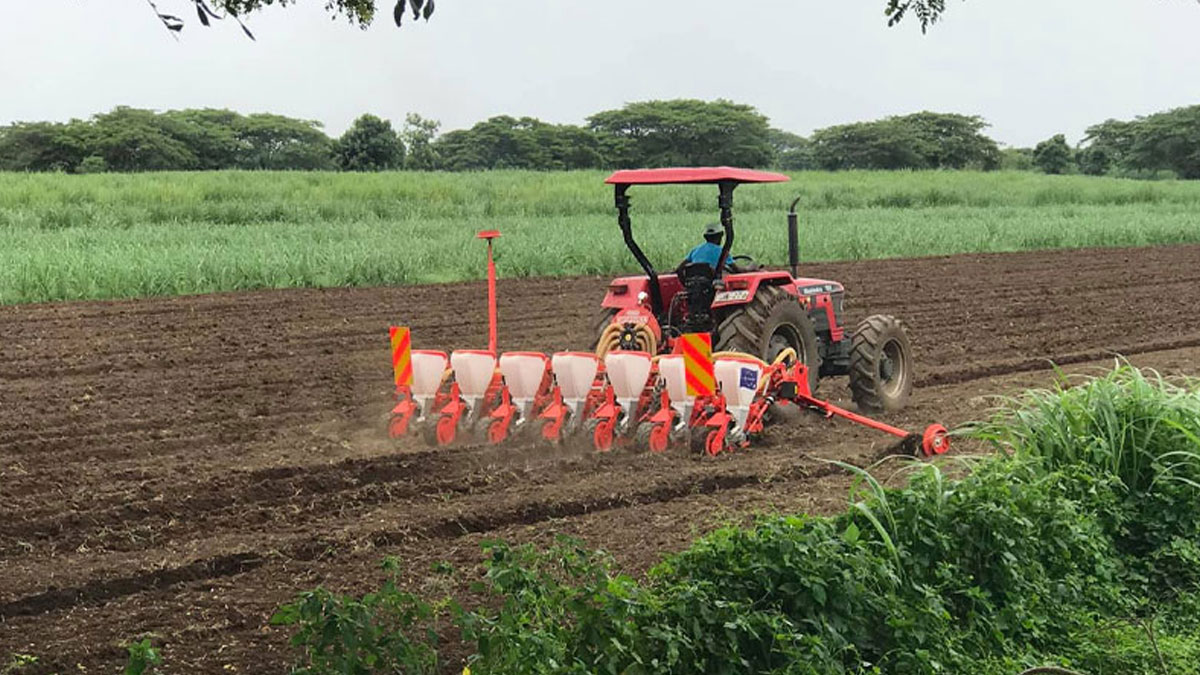
With the aim to increase cane production from current production of 1.6 million tonnes to 1.9 million tonnes by 2024 season, a sum of $11 million is allocated for Sugar Development and Farmers Assistance Program, New Farmers and Lease Premium Assistance, Weedicide Subsidy, Farm Incentive Program and Cage Bins.
The Ministry of Multi-Ethnic Affairs and Sugar Industry is allocated a sum of $51.7 million in the new financial year of which $49.7 is for the sugar unit.
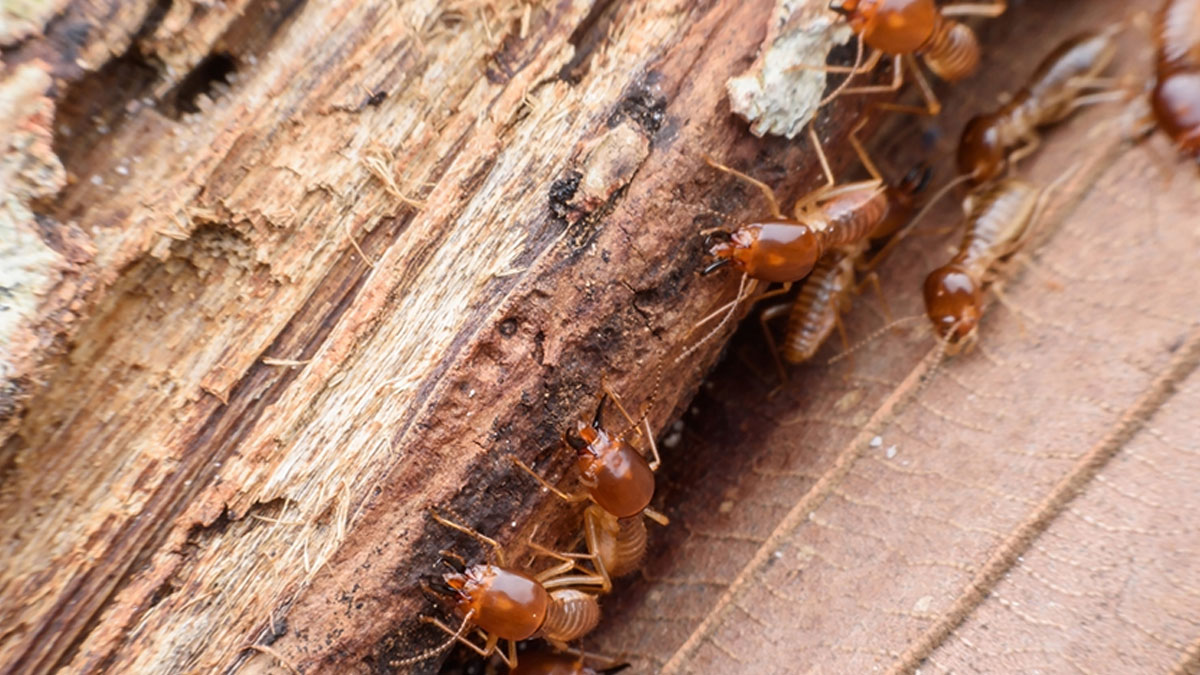
Govt has allocated a sum $3.0 million to assist those Fijians whose properties has been damaged/affected by termites in the western and northern division.
The Ministry of Finance will release more details on the roll out of this initiative soon.
$5 million is allocated to Fiji Cooperative Dairy Company Limited and for dairy extension programme.
They will review the entire dairy industry. Prof. Prasad says this is another disaster left by the previous government as the dairy industry is on the verge of collapse.
For the first time, they are now providing weedicide and fertilizer subsidy for non-sugar crops which includes rice, ginger, dalo, and cassava with a funding of $1 million to boost production of these crops.
$47.5 million is provided for the crops and livestock research and extension services to strengthen agricultural productivity.
$13.9 million has been allocated to fund the agricultural marketing authority, Committee on Better Utilisation of Land, and commercial agriculture development.
The Ministry of Agriculture and Waterways is allocated a budget of $95.2 million in this Budget which is a major increase of $37.3 million.
Govt has also re-established the Public Works Department (PWD) to improve the state of rural roads around the country with an initial setup cost of $5 million.
Ministry of Public Works, Meteorological Service and Transport is allocated a sum of $98.3 million.
$82.2 million for the Transport Infrastructure Investment Sector Project financed through Asian Development Bank and World Bank loans of US$100 million and US$50 million, respectively.
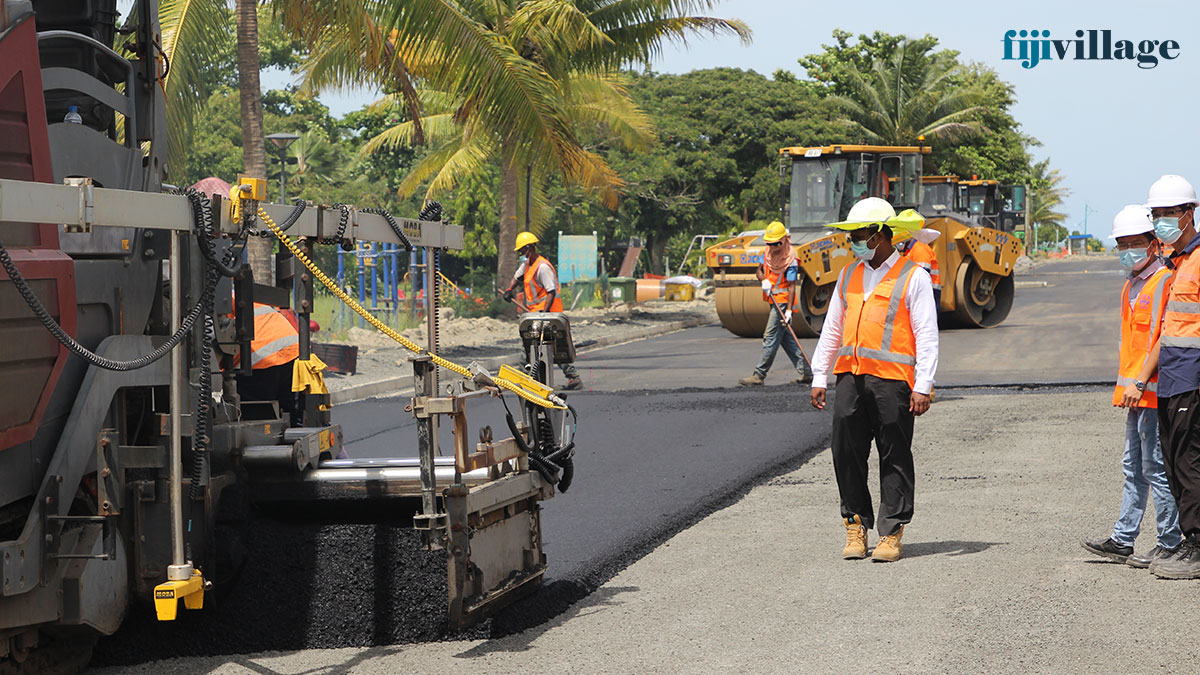
$35.4 million is allocated for the completion of the ongoing bridge projects, $18.3 million for the rural roads programme, $13.2 million for the upgrade of Queen Elizabeth Drive
$42.0 million for completed maintenance and emergency works, $60 million is provided for the renewal and resurfacing of roads An increased allocation of $100.6 million is allocated for road maintenance.
The Fiji Roads Authority is allocated a budget of $387.6 million which comprises $14.7 million for operations and $372.9 for capital expenditure.
In the last eight years, a total of around $3.1 billion was spent by FRA without any strategic plan, without much priority and without proper costing.
A new initiative by the Coalition Government will set aside 3 PhDs, and 5 Masters by Research awards for study at New Zealand Universities.
The full details and eligibility and the selection criteria handbook will be published by TSLS soon.
Effective from 1st January 2024, all students under scholarships other than merit-based will receive $2,500 per semester if they study at campus away from home, $1,500 for home-based campuses.
In terms of allowances, students under merit-based scholarships will be eligible for $3,400 per semester.
The bonding for new students under this scheme will be years of study multiplied by 1.5 times if tuition only and years of study multiplied by 2 times if tuition and allowance is paid.
The eligibility marks will be based on labour market needs and enrollment capacity of the universities.
Prof. Prasad says this will cater for the scholarships of 8,720 new students and funding needed for the 9,148 existing students.
Moving forward, the govt will provide all eligible students with scholarships under the rebranded Fijian Scholarship Scheme with a total budget of $148.2 million in this Budget.
The bond service for students whose TELS debts will be forgiven, will be years of study multiplied by 1.5 for these graduates. Those who choose not to serve the bond will have to pay the equivalent cost amount.
Funding is also provided to Corpus Christi, Fulton College, Montfort Technical Institute, Monfort Boys Town, and Vivekananda Technical Centre.
The Fiji National University will be provided a funding grant of $43.4 million, University of Fiji is provided an increased grant of $2.8 million while the newly established Pacific Polytechnic will receive a funding grant of $1.0 million and Sangam Institute of Technology has its grant increased from $114,000 to $614,000.
In this Budget, USP will receive a total funding of $53.5 million.
Government will continue providing financial support to our tertiary institutions with a total funding allocation of $103.3 million.
Prof. Prasad says the employers have been suffering from this and the previous Government’s hasty decision to remove the NTPC levy.
The govt plans to revamp the apprenticeship scheme in the next few months and also review the NTPC levy and how best to support and fund skill upgrades in the workforce. Technical education - they are now going to invest in this and work together with existing service providers, including the newly established Pacific Polytech.
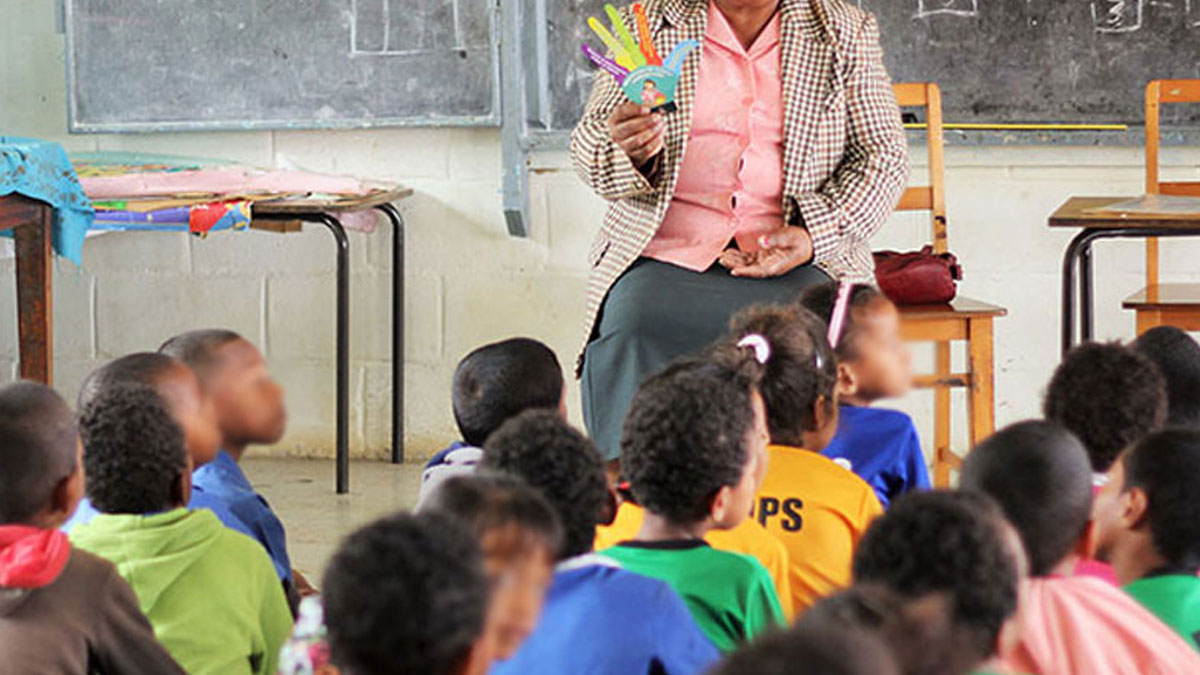
$49 million is allocated for the overall maintenance and upgrade of schools including the construction of TC Yasa affected schools and staff quarters in Vanua Levu. The Australian Government has provided $30 million towards this.
$45 million has been allocated to continue the ‘Back to School Support’ of $200 per child for students from early childhood to Year 13 for the school year 2024. This will benefit over 230,000 students for families with less than $50,000 household income.
Free education and transport assistance for ECE, primary and secondary school students will continue with a total funding allocation of more than $100 million.
$8.9 million is allocated for salary upgrade of teachers who have completed relevant qualifications to move to a higher band in line with the Teacher Remuneration Setting Policy.
The salaries and wages budget for the Ministry has been increased from $318.1 million to $322.6 million to cater for the funding for the more than 14,000 existing teachers and newly established 179 new teaching and non-teaching positions at the Ministry of Education.
The education sector is given the highest allocation in this Budget to a tune of $845 million.
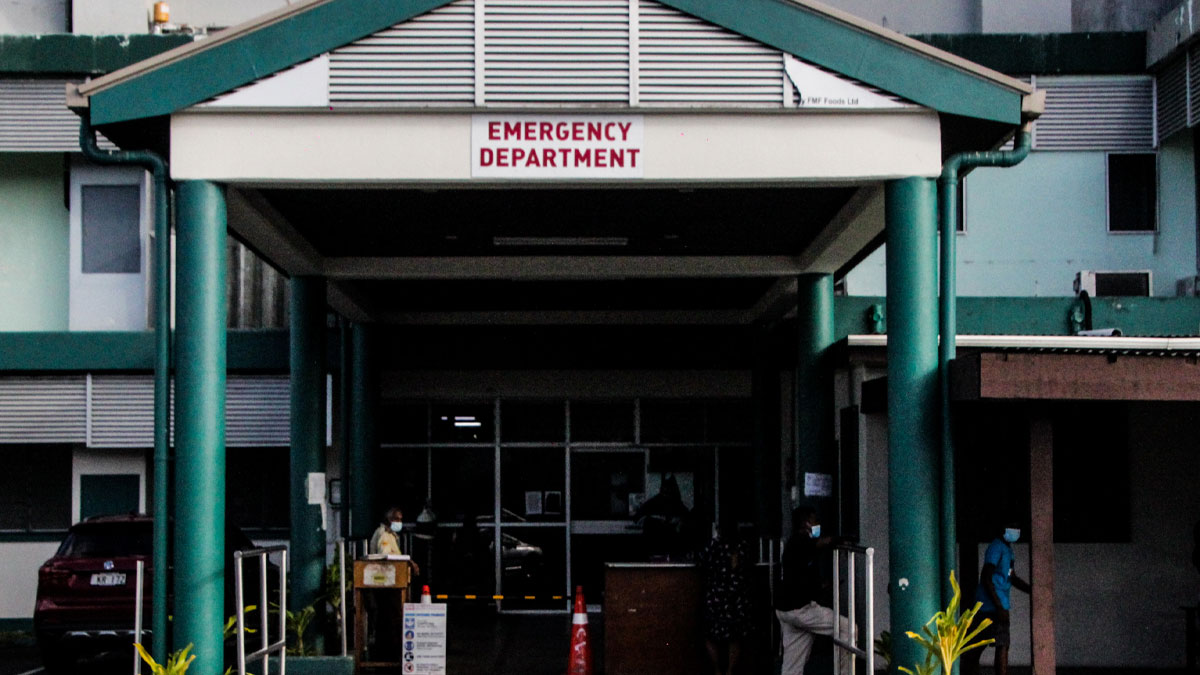
From 1st August 2023, only patients with a combined household income of $30,000 or less per annum can qualify for the free services at the private practitioners.
$16.4 million is allocated for the upgrade and maintenance of urban hospitals and institutional quarters, permanent walkway for the maternity hospital at CWM, purchase, installation and replacement of ICT equipment, and a major interior upgrade of Labasa hospital.
$2.5 million is allocated for the Kidney Dialysis Treatment Subsidy. The allocation has been increased by $1 million from this year’s level to cater for the increase in the dialysis subsidy from the current $150 per session to $180.
$63 million has been allocated for public health programmes, Emergency Radiology and Laboratory Services, procurement of drugs, consumables, medicines, and purchase of bio-medical equipment and accessories.
They are also providing $11.6 million for the upgrade of nurses salaries and overtime.
The nursing assistant and nurse aide positions have been created to support the nurses focus on their core role, where these aides and assistants will take over the non-clinical responsibilities like making the bed, getting the consumables etc.
This will cater for 250 Intern nurses to move up to become registered nurses; 237 new Intern nurses; 46 Nursing Assistants; 50 Nursing Aides; 40 Midwives; 94 Medical Laboratory scientists; and additional support staff in various hospitals and non-medical officers for the Fiji Pharmaceutical & Biomedical Services to strengthen capacity and improve procurement efficiency.
The salaries and wages budget for the Health Ministry have increased to $126.4 million.
The Ministry of Health is allocated a budget of $453.8 million, a significant increase of $58.7 million from this year.
$4 million is allocated for iTaukei Land Development to help landowners with the development of their land for commercial purposes.
To recognise and support the Turaga-ni-Yavusa in decision-making and Vanua administration, a monthly allowance of $100 has been allocated for 648 Turaga-ni-Yavusa under the Vanua Leadership Allowance with a sum of around $0.8 million.
The Mata-ni-Tikina quarterly allowance will be increased by $150 per quarter, which is equivalent to an increase of $50 per month for the 262 Mata-ni-Tikina.
The Turaga-ni-Koro monthly allowance will be increased from $100 to $150 per month for all 1,181 Turaga-ni-Koro for which a total sum of $2.1 million is allocated.
To strengthen iTaukei administration and provincial councils, a grant of $10.8 million is allocated to fund the 14 provincial councils, including $4.3 million to fund the salaries and wages of 182 provincial council officers and other operational expenses of around $6.1 million.
The Ministry of iTaukei Affairs, Culture, Heritage and Arts has been allocated a budget of $38.6 million, a major increase of $23.2 million from this year's allocation However, students need to serve the required bonds.
All outstanding TELS debts have been forgiven excluding in-service training.
$500,000 is allocated for the Women’s Plan of Action and a further allocation of $200,000 is provided to support women's organizations for their advocacy work. $43 million is allocated to cater for disability allowance, bus fare subsidy for elderly and disabled, electricity subsidy to households below $30,000 income and insurance for social welfare recipients. Over 100,000 people are expected to benefit from this.
The Family Assistance Scheme is allocated a budget of $45.
6 million. This is an increase of $11.5 million from the current financial year. A total of 26,000 households are expected to be assisted in this financial year.
$19.9 million has been allocated for the Child Protection Allowance. This is an increase of $6.2 million.
$100,000 is allocated to cater for the establishment of a new Department of Children.
FNPF will work together with Government to identify and put these pensioners on the social pension scheme, on top of what they receive from their current reduced FNPF pensions. Effective from August 2023, the 1,500 FNPF pensioners who had their pension rates reduced by the military regime will be able to access the Government social pension allowance of $125 if they are above the age of 70 or $115 if they are between 60 to 69 years.
The social pension scheme is allocated a large budget of $78.2 million, an increase of $23.2 million to cater for the needs of 54,200 senior citizens.
Those at the age of 70 years and above, and are on the social pension system, will receive a 25% increase in allowances.
This means that the monthly allowance will increase from $100 a month to $125 a month effective August 2023. Those between the age of 65 to 69 years will have their monthly allowances increased from $100 to $115.
More than 90 thousand people on social welfare will directly benefit from increased monthly allowances of 15 and 25 percent.
The funding allocation for the Ministry of Women, Children and Social Protection is increased from $147.7 million to $200.2 million. This is a major increase of $52.5 million. The Coalition Government will review the current minimum wage rate in the next financial year.
In the next 6 to 9 months, they will holistically review the civil service remuneration and pending the review the salary structure of the civil service will be readjusted to be commensurate with the work the civil servants are doing for the nation.
He says they know this has not been done for almost 5 years and the hardworking civil servants and the teachers, police, medical professionals have not received a pay rise for some time.
The govt is working together with the workers representatives to review the overall pay and benefits of the civil servants.
Employer and employee FNPF contributions will be restored at18 percent effective from 1st January 2024.
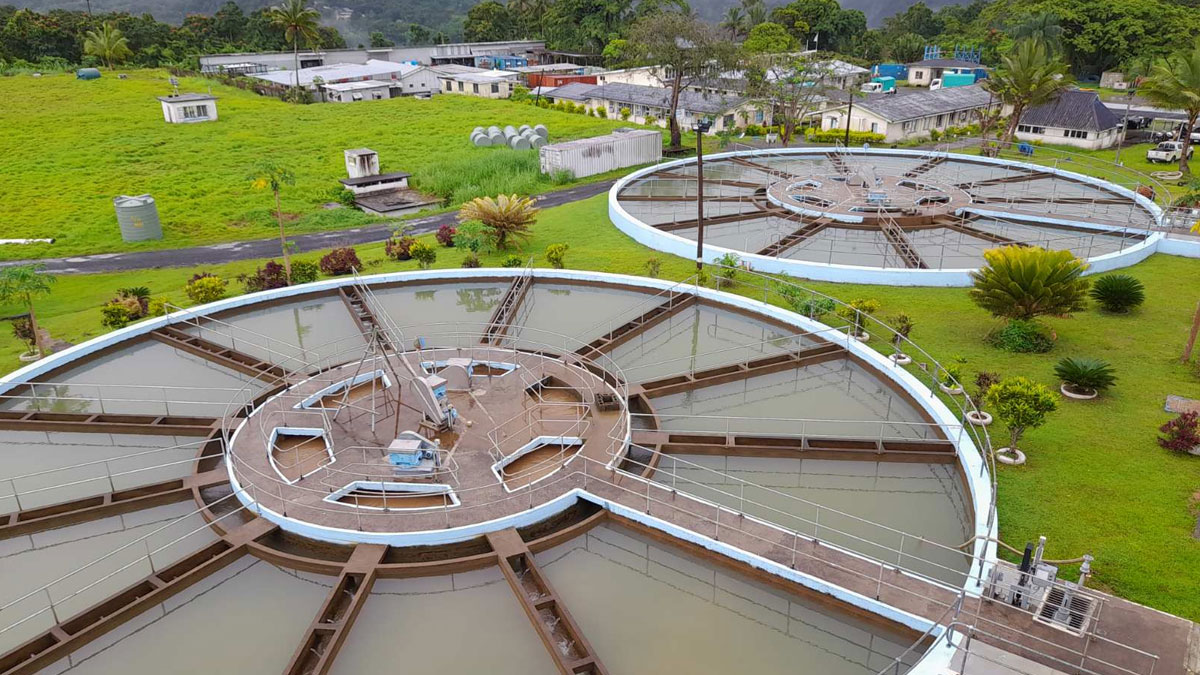
They are working with the Asian Development Bank for a major institutional revamp of the Water Authority, including governance, investment planning, asset management, infrastructure replacement and upgrade, review of water tariffs, investment in our people and improving customer service management.
He says it is going to take time and cost over $500 million to replace the 40-year-old pipe system which is leaking underground.
$51.2 million has been allocated for the completion of the Viria water project. The total cost of the project is approximately $400 million.
The water sector will have an increased budget of $250.8 million. This is a major increase of almost $60 million compared to the current budget.
Apart from these major reductions, they will remove all the exorbitant incidental allowances that are currently provided.
For assistant Ministers the top up will be reduced from the current 100 percent to 25 percent.
Ministers will have their top up reduced from 200 percent to only 50 percent.
The Deputy PM says for the travel allowance of the Prime Minister, the current 250 percent per diem loading will be reduced to only 100 percent.
Prof. Prasad says apart from the ministers 20 percent reduced pay, they are significantly cutting down ministerial travel allowances that were put in place by the previous government
$200 million has been allocated for the maintenance of our hospitals, health centres, schools, public buildings, government quarters, roads and bridges and water infrastructure.
They are also restructuring the ICT incentive to tighten the definition and eligibility criteria and align the maximum tax holiday period to 13 years in line with other incentives.
The concession on smartphones will be removed and replaced with a fiscal duty of 5 percent.
The concession on smartphones will be removed and replaced with a fiscal duty of 5 percent.
Concession code 117 (iii) which allows for a reduced duty of 10 cents per litre of fuel for hotels, manufacturers, cruise vessels and mining companies will be removed and a normal rate of 20 cents per litre on diesel will apply.
Code 235 allows hotels and resorts to import building materials, furnishings and fittings, room amenities, kitchen and dining room equipment, utensils and outdoor equipment all duty-free. The government will increase the fiscal duty on this concession from 0 to 3 percent.
Concession code 231 which is available to manufacturers for import of packaging products, that concessionary rate will also be increased from zero to 3 percent. Customs concession code 236 which currently allows all manufacturers to access duty free raw materials and other machinery and equipment, will have the concession rate increased from zero percent to 3 percent.
This would mean that the maximum marginal tax rate will be reduced from the current 44 percent to 39 percent.
He says the Social Responsibility Tax will be simplified by merging it with the PAYE structure, along with a 5-percentage points reduction on each band, for those earning above $270,000, effective from 1st January 2024.
Prof. Prasad says the random change to the capital gains tax regime by the previous govt, designed to help a specific set of special taxpayers, ended up costing the Government almost $70 million in lost revenue. He says they are now going to right this wrong and remove this exemption.
Motor vehicle import excise duty will increase on all new and used passenger vehicle by an additional 5 percent.
To curb NCDs and promote healthy living, a domestic excise of 40 cents per kilogram or per litre and import excise of 15 percent will be introduced on juice (carbonated drinks, Frubu, Tampico, Pulpy, Just Juice and Marigold), ice cream, sweet biscuits, snacks, and sugar confectionery.
Prof.Prasad says they are going to increase the excise tax on alcohol and tobacco by 5 percent while the excise on carbonated / sugar-sweetened beverages will be increased from 35 cents per litre to 40 cents per litre.
Departure Tax will increase from the current $100 to $125 effective from 1st August 2023 and will further increase by an additional $15 to $140 effective from 1st January 2024. This will add a total of $30 million towards overall tax revenues.
This will be for new companies and only for a period of 7 years.
These corporate tax rate increases will add about $73.5 million in revenue.
New companies eligible for reduced corporate tax for listing on the South Pacific Stock Exchange will have their tax rate increased from the current 10 percent to 15 percent. Prof. Prasad says they will increase the corporate tax rate from the current 20 percent to 25 percent.
Government will also reduce import excise on chicken portions such as wings, drumstick, legs, feet, thighs, etc from 15 percent to 0 percent.
Fiscal duty on sheep/lamb meats will be reduced to zero. Beef meat the duty is being reduced from 32%to 15%.
Government will reduce fiscal duty from 32 percent to 15 percent on canned mackerel (except canned tuna), corned mutton, corned beef and beef products, canned tomatoes, prawns and duck meat.
These measures will generate additional net VAT collections estimated at about $446 million for Government.
Professor Prasad says the supply of all other goods and services, effective from 1st August 2023 will attract a VAT rate of 15 percent.
We have added prescribed medicines to the list to make it 22 items. The items on zero VAT will include, flour, rice, sugar, canned fish, cooking oil, potato, onion, garlic, baby milk, powdered milk, liquid milk, dhal, tea, salt, soap, soap powder, toilet paper, sanitary pads, toothpaste, kerosene, cooking and prescribed medicines.
Effective from 1st August 2023, there will only be 2 rates of VAT. The 21 items on zero VAT will continue.
The fiscal deficit is set at $639 million, equivalent to 4.8 percent of GDP. This is a major reduction in the deficit. In the last four fiscal years the average deficit has been 9 percent.
Total government expenditure for the 2023/2024 budget is $4.3 billion with a projected revenue of $3.7 billion.
We are projecting this to reduce to 79.3 percent of GDP by July 2024 but the bad news is that this ratio is still too high. We have too much Government debt for the size of our economy.
We start July with a debt-to-GDP ratio of almost 88.8%.
Remittances crossed the billion-dollar mark last year and are increasing further, likely to cross the $1.2 billion mark by the end of this year.
Our foreign exchange levels remain strong, standing at over $3.4 billion as of yesterday, equivalent to almost 6.1 months of retained imports.
But we know that we cannot depend on tourism alone. We have all learned that bitter lesson in the last three years.
Yields in the tourism industry are increasing as our tourists are spending much more than before and staying slightly longer.
He also says after almost a decade, they reconvened the Cabinet Sub-Committee on Budget chaired by the Prime Minister and comprising the 3 Deputy Prime Ministers. Theme of the budget is “Rebuilding Our Future Together”.
He says the coalition government wants people to express themselves freely, and they want to hear their concerns.
He says one of their first acts in Government was to repeal the repressive Media Industry Development Act that has plagued our media industry and kept the people in the dark.
Prof. Prasad says as a doctor once told him, “90% of a patient’s diagnosis is his/her history.” He says because it is now that we must find the money to fix these problems.
He says some people, will accuse him of talking only about the past but this is not the past, this is our present.
The Deputy PM says almost one dollar out every four in this Budget must now be spent servicing Government debt.
He says in the upcoming financial year, they must find a staggering $1 billion to service this debt. That is about $536 million for interest payments and another $516 million for principal repayments alone.
Prof.Prasad confirms they have inherited a public debt of close to $10 billion, almost the size of our entire economy.
Prof Prasad says it remains a mystery to us how $120 million has been spent on the Walesi national digital platform – and we now have to find out where this ridiculous amount of money went.
In the last 10 years, despite all the boasting and big talk about booms and “never before this” and “unprecedented before that”, our average economic growth has been little more than 3% per annum. And he says that is not enough to significantly improve lives and incomes in our country.
He says we must do better than this.
Prof. Prasad says they are a six-month-old government with a mandate to deliver change but what they have walked into is a deeply grim state of affairs.
The Finance Minister says we must rebuild an environment in which people are encouraged to speak out, to complain, to suggest alternative approaches, to draw their attention to the things that matter to them.
He says everything is connected to everything else.” We cannot progress until we have rebuilt trust and unity.
The Finance Minister says this was disrespectful, not just of the members of this House but to all the people of Fiji.
He says this is not a small point as we know that in past years there have been delays, sometimes for hours, in the delivery of the Budget – whether from disorganisation or indecision, he does not know.
Prof. Prasad says he promised a few days ago that we would deliver the Budget on time.
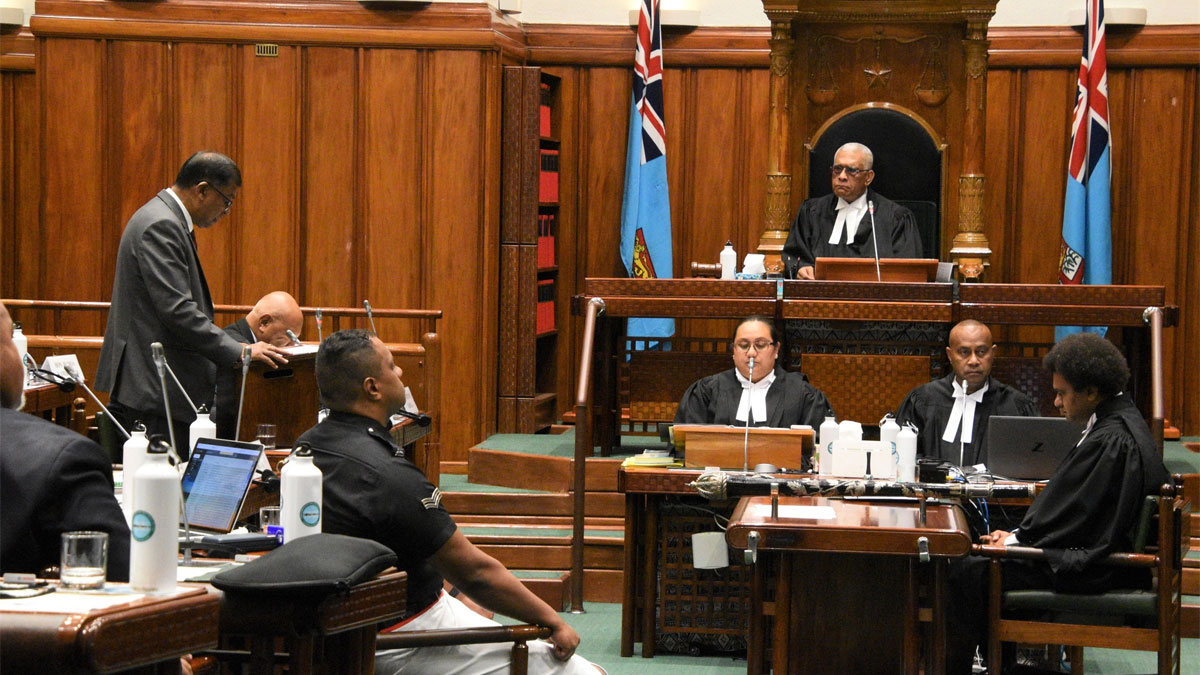
Deputy Prime Minister and Minister for Finance, Professor Biman Prasad has tabled the Appropriation Bill and is now starting with his budget address. Stay with us for live updates of the budget address to be delivered at 10am by the Deputy Prime Minister and Finance Minister, Professor Biman Prasad.