![[Image: File Photo]](https://www.fijivillage.com/news_images/153185017364f17095580ecea477ce.jpg)
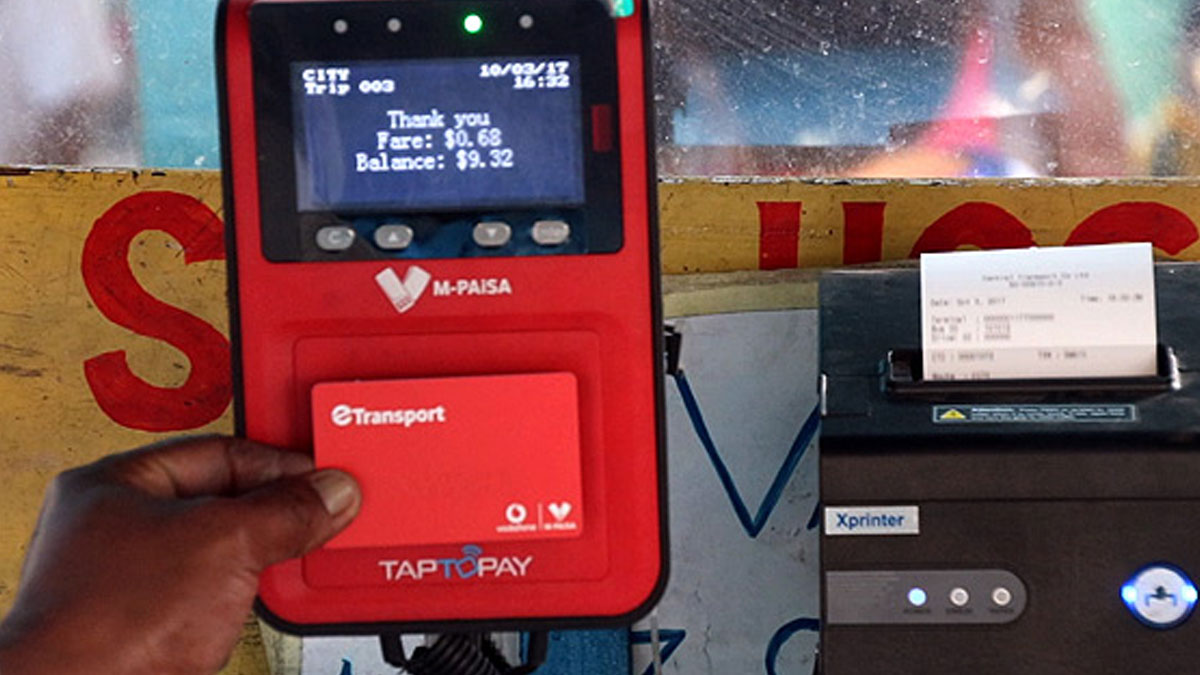
E-ticketing service provider, Vodafone Fiji has said that one of the main challenges facing Vodafone is attracting businesses to offer e-ticketing top-up services and the company also stresses that they need the assistance of bus operators and bus drivers to make the redeeming system work for passengers.
While responding to questions from fijivillage news regarding the number of top up outlets, Vodafone says it has introduced a number of initiatives to address this challenge, including enabling passengers to top-up their cards using M-PAiSA.
The company says as a convenient top-up option, Vodafone has enabled eTransport cards top up via M-PAiSA to be redeemed in the bus to reduce reliance on top up agents.
It says the redeeming feature has been enabled on all bus machines to make it easy and convenient for commuters.
Vodafone Fiji also says as alluded to by the Acting Minister for Communication, Filimoni Vosarogo in his statement, the e-ticketing hardware is nearing its of end of life.
It says this is normal for any electronic device as new and more advanced models are introduced in the market, the older models are gradually phased out by manufacturers.
However, the company says this does not mean that the current system has stopped performing its required functions.
Vodafone says the travelling public is still able to use their e-ticketing card to tap and pay their bus fare as normal without any disruption.
Vodafone says it will continue to provide e-ticketing services the best it can, given the many constraints to ensure minimum inconvenience of the travelling public.
It says the public is also able to check top up agents near them by dialling *134# on their mobile to find the most conveniently located top up agent.
Vodafone says there are currently 566 active top up agents throughout Fiji, and they continue to work with independently owned businesses to sign up more if they wish to provide e-ticketing top up.
Although the availability of disposable cards in buses is stated as a requirement in buses under the Electronic Fare Ticketing Act, Vodafone says the disposable cards were introduced to this system as an aid for the public to transition into the eTransport system.
Vodafone says it was purely intended for a temporary period so that the commuters had sufficient time to acquire their permanent card.
It says the first permanent card is available at no cost to the public, and in the last 6 years, Vodafone has provided around 2 million cards for a total population of 900,000.
95 percent of these cards were given free of charge.
Vodafone says this means every travelling public must have access to a permanent card which they can top up and use.
An average of 370,000 permanent cards are used per day.
Vodafone says it fully sympathises with the public who are finding it difficult to top up their card due to lack of convenient access to agents. It says it is doing its best under prevailing circumstances to assist the best it can in working with independent businesses and on-boarding additional agents.
They also urge consumers to use M-PAiSA where possible to top up their cards and also to top up their cards at least for one additional trip.