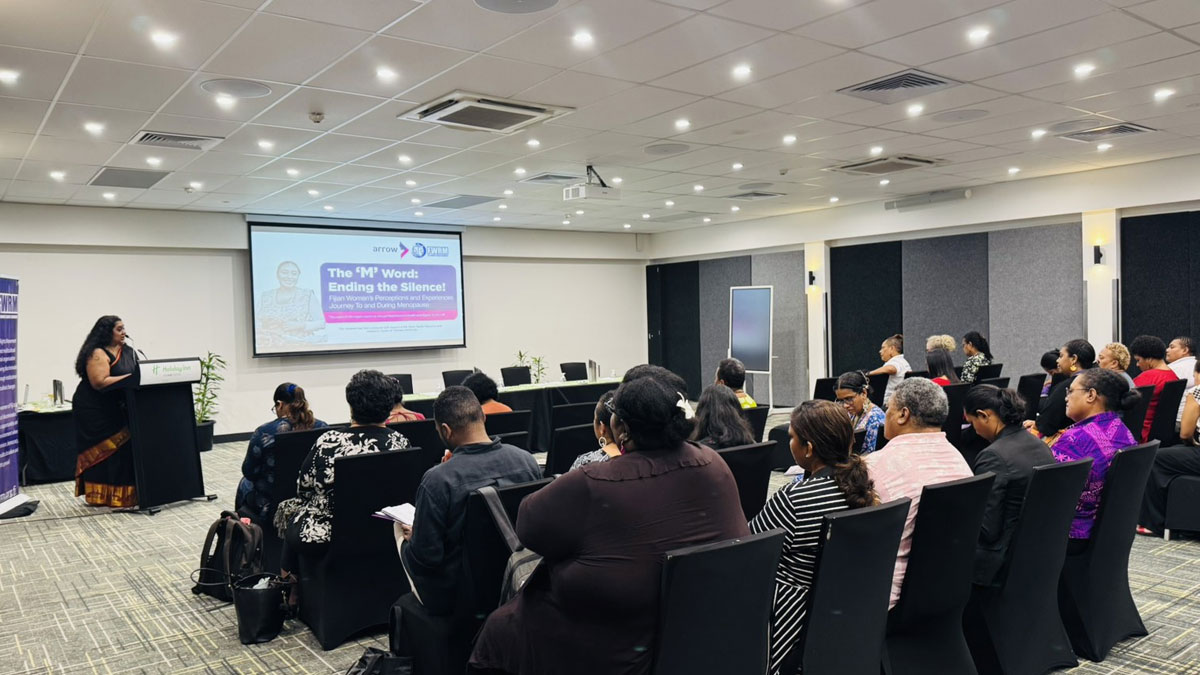
The Fiji Women’s Rights Movement urges the government to place greater emphasis on outreach regarding menopause, and the Ministry of Education, Ministry of Women, Children and Social Protection and Ministry of Health and Medical Services to work together to incorporate menopause education into the curriculum to foster a holistic and lifecycle-oriented approach.
According to the recommendations to the government in the report titled The ‘M’ Word : Ending The Silence – Fijian Women’s Perceptions and Experiences Journey To and During Menopause, the FWRM says the government should ensure that individuals receive comprehensive knowledge about menopause and its impacts as part of their overall understanding of life’s various stages and transitions, ultimately promoting better health and well-being across the lifespan.
They say the ministries should develop a fact sheet on menopause specific to Fiji, as well as easily accessible information through brochures, websites, hotlines (calls and text messages), and community workshops.
The FWRM says the information should be culturally sensitive, age appropriate and available in vernacular languages to reach diverse communities.
They say to address obesity as a contributing factor to menopause and develop comprehensive strategies to address obesity, considering its significant impact on the severity of menopausal symptoms.
The report says this can be done by providing guidance on healthy lifestyle modifications, including nutrition, exercise, and stress management, to help women reduce obesity and improve overall well-being during the menopausal transition.
The FWRM says the Ministry of Health should ensure there is proper clinical supervision as a form of accountability to better quality of services.
They also urge the government to develop robust programmes and policies that cater to the needs of women, facilitating a smooth transition from the ageing phase to the older stage.
It is recommended that the government undertake this in close consultation with women who are experiencing menopause.
These programmes can include transportation programs targeting the older population where dedicated transportation programs can be introduced to assist elderly individuals in accessing essential services such as hospitals and supermarkets, insurance programs must expand and promote insurance programs tailored to the needs of women, providing coverage for healthcare, long-term care, and other essential services.
The recommendation states that these programs should be accessible and affordable, offering financial security and peace of mind to women.
They say the government should combat the invisibility of older women by actively acknowledging their contributions and ensuring their inclusion in policy-making, programming, and decision-making processes.
This can be achieved through increased representation and participation in relevant forums and initiatives concerning women.
The report stresses that with the projected increase in the population of older women, the government must develop a plan to address their menstrual health needs.
They recommend allocating more funds in the annual budget for menstrual hygiene products.