The growing threat of illegal wildlife trafficking, including the smuggling of Fiji’s globally unique crested iguana, has underscored the urgent need to strengthen Fiji’s national biodiversity protection efforts.
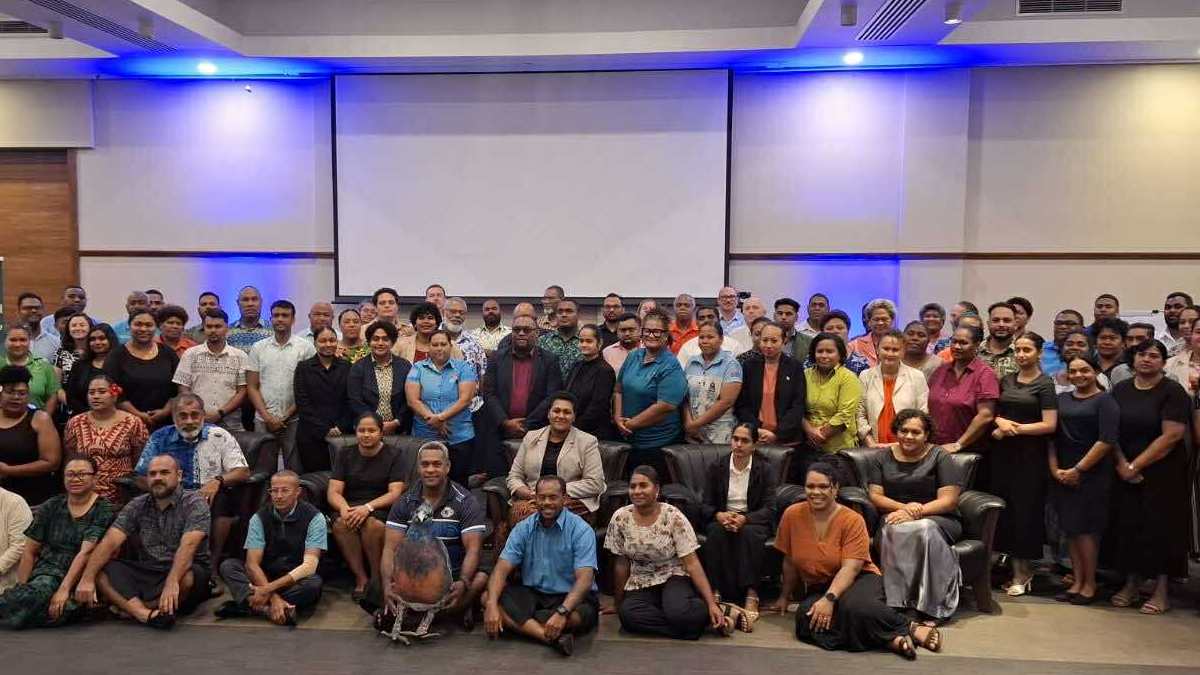
This was highlighted by the Director of the Department of Environment, Senimili Nakora while opening of the National Dialogue on the Zero Draft of Fiji’s National Biodiversity Strategy and Action Plan at the Grand Pacific Hotel in Suva this morning.
Nakora, who spoke on behalf of the Permanent Secretary for the Ministry of Environment and Climate Change, says the Ministry stressed that protecting Fiji’s biodiversity is not only an environmental concern, it is critical for livelihoods, food security, cultural identity, and the resilience of communities.
Nakora says that Fiji ratified the Convention on Biological Diversity in 1992 and remains deeply committed to conservation.
Despite its small land area, she adds that Fiji is home to more than 1,600 species of vascular plants, over half of which are found nowhere else.
She highlights that its waters host more than 300 coral species and roughly 1,200 reef fish species, making it a global biodiversity hotspot.
The national dialogue brings together government ministries, NGOs, academic institutions, private sector partners, and community representatives to review the Zero Draft of the revised NBSAP, a key national policy document guiding biodiversity protection.
She says that the new draft is aligned with the Kunming-Montreal Global Biodiversity Framework, adopted at COP15, which sets 23 targets — including protecting 30% of land and sea areas, restoring degraded ecosystems, reducing invasive species, and reversing biodiversity loss by 2030.
Nakora emphasizes that Fiji’s revised NBSAP must be evidence-based, achievable, and aligned with the country’s National Development Plan, ensuring benefits for both nature and people.
She highlights that since 2024, Fiji has held national workshops, submitted high-level targets to the CBD Secretariat, and engaged with communities, civil society, and government stakeholders.
Nakora made it clear that government cannot do this alone.
/+AUDIO-1611150768691a5fc10846a1fd9886.mp3+AUDIO/
The Ministry also acknowledged the support of partners, including UNEP, the Global Environment Facility, NatureFiji-MareqetiViti, WWF, provincial offices, NGOs, and community champions.
The National Dialogue on the Zero Draft of Fiji’s NBSAP is now officially open.
Further consultations will be held across the Western and Northern Divisions in the coming weeks to ensure the NBSAP reflects a national vision, not just a ministry plan.
@fijivillage.com Illegal trafficking of Fiji’s endemic species drives urgent calls for strong biodiversity
♬ original sound - fijivillage