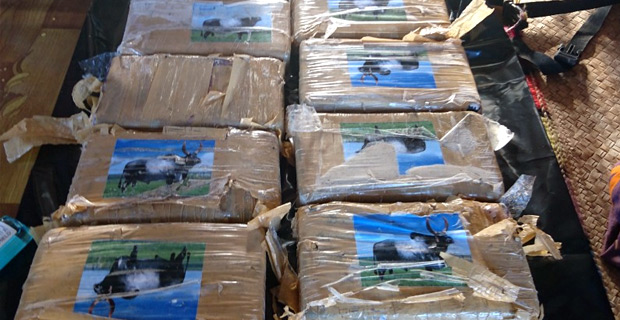
53 bars of cocaine have been found within Fiji's border as of today and from January to June, more than 10kg of methamphetamine has been seized.
This has been confirmed by the Police Commissioner Sitiveni Qiliho while opening the Fiji Narcotics Committee Workshop at Tanoa Plaza.
Qiliho says the 51 bars have been tested and confirmed to be cocaine, while the latest find in Savusavu and on an island in the Lau Group are yet to be tested and are being transported to Suva for analysis.
He says the 51 bars have an estimated street value of $43 million and similar findings were made in Tonga where 58 bars in total were found on two of their islands, and have been confirmed to be the same quality of cocaine found here in Fiji.
He says right now, a 10 men team of officers are in the Lau Group conducting investigations following the discoveries.
Qiliho says they are collectively responsible for policing the illicit drug trade whether it be border security, monitoring of the Exclusive Economic Zone or gathering and sharing of intelligence and investigations.
He says if they fail to identify the enforcement gaps, more discoveries will be made and the perception the public will have on respective institutions is whether they are doing enough to keep these drugs from entering our borders.
Qiliho says the threat assessment for the Pacific which is based on the United Nations Office on Drugs and Crime report, has found that Pacific island countries, including Fiji, are increasingly targeted by drug trafficking groups as a transit and destination for a variety of drugs including synthetic drugs, in particular methamphetamine.
He says the war on drugs may seem like a never ending battle, and as they zero in on the latest trends, new trends are emerging as syndicates look for ways to beat the system.
Qiliho says a few weeks back, the New Zealand Defence Force and the Fiji Revenue and Customs Service also contributed in the recovery phases following the discovery of illicit drugs in the Lau Group and these are two examples of how they should be working together to fight this trade.
He states that at the end of the workshop, he is optimistic that the participants will be able to pave the way forward and better understand why there is a need to have an integrated multilateral and multi-agency response if they are to counter the world drug problem.
Qiliho says Fiji is no longer just an island in the Pacific, or a dot as we were most commonly referred to, but we are making great strides globally and the reputation as just a small Pacific Island nation has changed drastically.
He says we cannot allow the illicit drug trade to tarnish the reputation that has showcased what we are capable of producing as a nation.