![PM takes a shot with children after renewing Fiji’s commitment to upholding & protecting the rights of every child on the 30th Anniversary of the #CRC [Photo:UNICEF Pacific]](https://www.fijivillage.com/news_images/4139350875dd5ad43bee8bcf37af57.jpg)
As we mark 30 years of the Convention on the Rights of the Child this year, UNICEF has highlighted that child rights have had no expiry date and today they have not changed.
However, according to UNICEF, childhood has changed and urgent, concrete action is needed to protect and promote the rights of every child, now, and for future generations.
A special message to all children from @UNICEFPacific Ambassador @pitaTofua.#WorldChildrensDay #CRC30 https://t.co/pUbNmkaGKo
— UNICEF Pacific (@UNICEFPacific) November 20, 2019
UNICEF has highlighted there have been historic gains overall for the world’s children since the Convention on the Rights of the Child was adopted.
Happy #WorldChildrensDay!
— UNICEF Pacific (@UNICEFPacific) November 19, 2019
Today marks 30 years of the #CRC. We hope you’re jumping w/ joy like these children from Ba Muslim Primary School. Let’s celebrate the universal rights of every child to go to school, raise their voice & share their talents w/ the world.@UNICEF pic.twitter.com/WTVvWM4TLU
They have however added that according to a new report released this week titled The Convention on the Rights of the Child at a Crossroads, many of the poorest children are yet to feel the impact.
UNICEF says the report looks at the undeniable achievements of the past three decades, proof that where there are political will and determination, children’s lives improve.
We’re excited to see the children of #Vanuatu taking the lead to learn more about #CRC30, & how govt. programmes on early childhood development are helping to support children, during a field trip w/ @UNICEFPacific & Save the Children Vanuatu.
— UNICEF Pacific (@UNICEFPacific) November 19, 2019
© Groovy Banana Photography pic.twitter.com/12Ao2wz8lR
According to UNICEF, citing progress in child rights over the past three decades, the report notes that the global under-five mortality rate has fallen by about 60 percent.
There has been a decrease in the rate in the majority of Pacific Island countries.
The highest decrease has been recorded in Kiribati with almost 50% in the under-five mortality rate.
Happy #WorldChildrensDay from the Federated States of Micronesia (FSM)!
— UNICEF Pacific (@UNICEFPacific) November 20, 2019
H.E. David W. Panuelo, the President of FSM, celebrated World Children's Day w/ the children of FSM yesterday during the National Youth Conference.
© @FSMPIO pic.twitter.com/DQJtoN4qH0
According to UNICEF, the report states 2.6 billion more people have cleaner drinking water today than in 1990.
Kiribati has had an increased number of schools with improved access to clean water from 4% to 30%.
The report also states the guiding principles of the Convention on the Rights of the Child – non-discrimination, the best interests of the child, the right to life, survival, and development, and the right to protection, have influenced numerous constitutions, laws, policies, and practices in the region.
Happy #WorldChildrensDay from the children of Vanuatu!
— UNICEF Pacific (@UNICEFPacific) November 20, 2019
Credit: VBTC pic.twitter.com/BPPK5DD3rE
UNICEF says, however, this progress has not been even and children from the poorest households are twice as likely to die from preventable causes before their fifth birthday than children from the richest households.
They say the report also addresses age-old and new threats affecting children in the Pacific such as children are physically, physiologically and epidemiologically most at risk of the impacts of the climate crisis whereby rapid changes in climate are spreading disease, increasing the intensity and frequency of extreme weather events, and creating food and water insecurity adding unless urgent action is taken, the worst for many children is yet to come.
According to UNICEF, to accelerate progress in advancing child rights, and to address stagnation and backsliding in some of these rights, the report calls for more data and evidence.
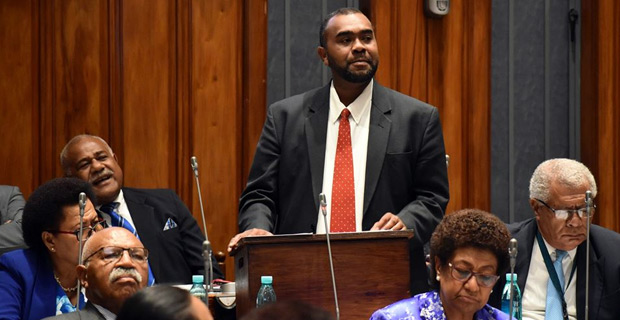
Thank you to @FijiPM, Hon. Josaia V. Bainimarama, for renewing Fiji’s commitment to upholding & protecting the rights of every child on the 30th Anniversary of the #CRC today.
— UNICEF Pacific (@UNICEFPacific) November 20, 2019
#ForEveryChild, every right#WorldChildrensDay
© UNICEFPacific/2019/Hing & @FijianGovt pic.twitter.com/QvNxEbL7d4
They say the report calls for more involvement of young people in co-creating solutions along with parents, caregivers, education and social workers, communities and governments, civil society, academia, the private sector and the media.