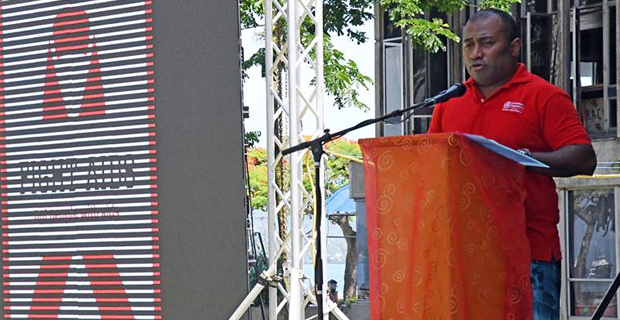
The Rainbow Pride Foundation is encouraging gay men, bisexual men and other men who have sex with men, transgender persons and sex workers to know their HIV status by getting themselves tested.
This is the key message of Rainbow Pride Foundation for the 2018 World AIDS Day today.
The Foundation Executive Director Isikeli Vulavou says that the global statistics indicate that gay, bisexual, and other men who have sex with men and transgender persons are the population most affected by HIV and in Fiji, the prevalence is higher among heterosexual people.
Vulavou says that while Fiji is classified as low HIV prevalence country, UNAIDS has estimated the number of people to be living with HIV in Fiji in 2015 was 732 with 432 males and 300 females.
He says that the spectrum projections show that epidemic is mainly projected in male population which might indicate a hidden transgender infection trend.
Vulavou said the increase in the number of new HIV confirmed cases in Fiji can be partly attributed to the expanded HIV testing services.
He says while the HIV testing services has been expanded there are still areas which have limited services and currently there are no targeted HIV testing or prevention services for key populations at higher risk.
Vulaono says that testing should be made accessible and available in the community.
He says that in line with this year’s World AIDS Day “Live life positively - know your HIV status” theme, the campaign is focusing on promoting testing among the target audience and these are the key populations and young men and women within the 20-29 years age range.
Vulaono says that testing is the only way to know for sure if you have HIV and he encourages the use of condoms when having sex.
Meanwhile, the UNDP Administrator, Achim Steiner says that the new HIV infections are rising in 50 countries worldwide and globally, new HIV infections have declined by just 18% in the past seven year.
He says that UNAIDS estimates that 9.4 million 25%, of people living with HIV do not know their status.
Steiner says that 47% of all new HIV infections are among key populations which are gay men and other men having sex with men, sex workers, transgender people, and prisoners.
He says that while HIV testing is available, key populations and other vulnerable groups such as adolescents, young people and migrants do not come forward to get tested because of stigma and discrimination, lack of confidentiality, and fear of violence and repercussion due to discriminatory laws, policies and practices.