A Ministry of National Planning paper on the state of Fiji's sugar industry which is being discussed in the Food Symposium states that the mill upgrade undertaken through a 86 million dollar loan from the EXIM bank of India has been very disappointing.
The paper states that the programme is 3 years behind schedule.
An audit undertaken by FSC on the sugar mill upgrade programme has highlighted the use of sub-standard equipment, the non compatibility of equipment brought in with the existing machinery, the poor workmanship of the Sugar Technical Mission team and lethargic attitude resulting in local FSC workers stepping in to try to complete the necessary upgrades.
The FSC board has invited the vendors who supplied the equipment to inspect the machinery and is intending to make a claim to the Government of India for the consideration of the factors highlighted by the audit.
The worsening performance of the sugar industry is mirrored by the poor financial position of FSC.
The Fiji Sugar Corporation has required annual government guarantees since 2001 to undertake short-term borrowings to meet it's working capital requirements.
The latest Government guarantee was granted early this year for 120 million dollars.
It has also been revealed that FSC has recently been finding difficulty meeting it's EU quota and also supply the local and regional markets.
As a result, FSC has been importing sugar from India and Thailand for the local and regional markets.
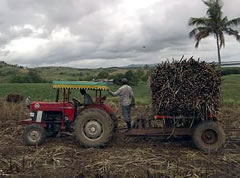
According to the statistics received by Fijivillage News, from the years 1989 to 2009, average cane production declined from 3.7 million tonnes to 2.3 million tonnes, which is a decline of 1.4 million tonnes of cane.
Similarly, average sugar production recorded a decline from 425,000 tonnes to 168,000 tonnes respectively.
This is a rapid decline and the issue needs to be addressed as sugar is one of Fiji's main foreign exchange earners.
The expiry of cane land leases since 1997 resulted in the loss of confidence in cane farming by growers and led to the migration of cane farmers.
The growers starting leaving the farms due to non renewal of ALTA and several evictions that took place from 1997.
The average number of cane growers declined from 22,874 in the year 1989 to 13,911 growers last year.
Cane area harvested fell in the same period from 72,000 hectares to 50,000 hectares.
While speaking at the Food Symposium at Novotel Lami earlier today, Prime Minister Commodore Voreqe Bainimarama said action needs to be taken and one of the most important issues is the availability of land.
Commodore Bainimarama said the government is now looking at commercialised farming and more land is expected to be available later this year.
Feature
Report says nil upgrade work disappointed
By fijivillage.com
15/04/2010 17:01
More from this day
Stories published on 15/04/2010
-
 FRU extends lottery ticket draw date15/04/2010 17:26
 -
 Lautoka soccer suffers another setback15/04/2010 17:08
 -
 Current trade deficit unsustainable-Reddy15/04/2010 16:57
 -
 Major developments expected to boost dairy industry15/04/2010 16:52
 -
 Bua man referred to St Giles Hospital15/04/2010 16:46
 -
 Ba soccer to celebrate 75th anniversary15/04/2010 15:23
 -
 Man charged with alleged murder appears in court15/04/2010 15:05
 -
 Man remanded in custody for impersonating a Solider15/04/2010 15:01
 -
 Sugar supply yet to normalise15/04/2010 14:54
 -
 RBF announces review by ADB consultant15/04/2010 14:33
Search this day in the archive